
Full Description
Background of the research:
Sri Lanka has a rich biological diversity; thus, its fungal diversity is not adequately studied and documented. Higher plants, vertebrates, and a few other selected groups have been studied extensively, but fungi remain largely unexplored. Recent fungal diversity estimations have predicted that the tropical regions would harbor a large number of novel fungal species. Only around 150,000 fungi out of approximately 13.2 million have been described to date. Fungi are ubiquitous; therefore, it is essential to conduct thorough investigations to discover novel taxa in various habitats and ecosystems. Sri Lanka may contain up to 25,000 mycota, but only around 3,000 are known to date. These known mycota include approximately 640 genera belonging to around 2,000 species.
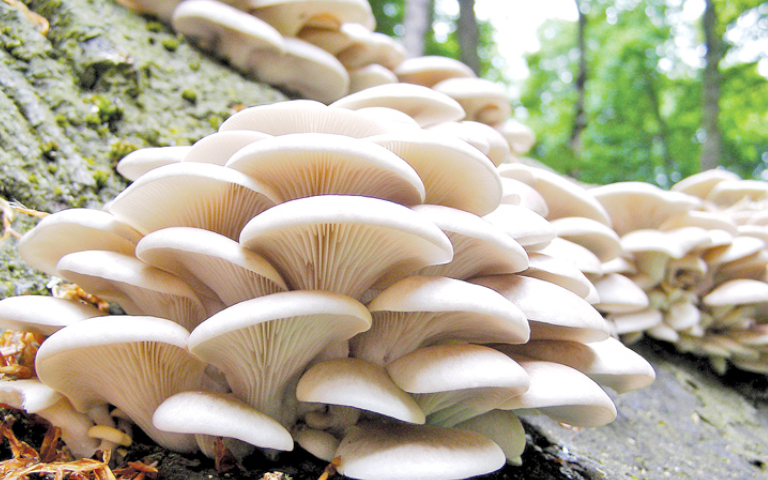
The basidiomycetes are a large and amazingly diverse phylum of fungi, which, together with the ascomycetes, make up the sub-kingdom Dikarya – often referred to as the “higher fungi”. Basidiomycetes include mushrooms and toadstools, jelly fungi, parasitic species causing rust and smut diseases on plants, and yeast-like forms, including the emerging human pathogen Cryptococcus neoformans. In the rainy seasons, abundant growth of Basidiomycetes is predominant where the environmental conditions, such as temperature, relative humidity, and sunshine, are favourable, which aids them in the breakdown of dead organic tissue. Mushrooms can be classified into three categories: edible, non-edible, and poisonous. Most mushrooms can be consumed, but some are also deadly poisonous. True mushrooms are large, fleshy growths typically found above ground, either on the soil or on a substrate, such as a tree trunk or other food source. Mushrooms act as the reproductive fruiting body of a fungus, while the main body of the fungus, which is the hyphae, exists underground.
Mushrooms are heavily used by humans as food due to their high nutritional value, which is attributed to their high protein, fiber, vitamin, and mineral content, as well as their low-fat levels and exquisite flavor. In addition to their culinary appeal, mushrooms have unique medicinal properties. Edible mushrooms comprise numerous bioactive components with various health benefits for humans. The value of mushrooms has recently been exploited for new and natural compounds that could modulate the response of immune cells, possess antimicrobial, antioxidant, and anticancer properties. Additionally, they have the potential to reduce the risk of hypertension, hypercholesterolemia, atherosclerosis, and cancer, while also helping to lower total blood cholesterol, lipoprotein cholesterol, and blood glucose levels.
Mycological research has been limited to certain parts of the country, and the available information is widely dispersed, difficult to access, and plagued by synonymy in Sri Lanka. Although at present, mushroom consumption depends heavily on cultivated varieties, foraging for wild mushrooms remains a common leisure activity. A substantial source of knowledge on the edibility of wild mushrooms remains in the traditional knowledge of indigenous populations. However, ethnomycological studies continue to document the discovery of new species, both edible and poisonous, worldwide.
In Sri Lanka, local demand for mushrooms has steadily increased due to their nutritional and medicinal value. However, due to a lack of knowledge about mushrooms in Sri Lanka, only a few species are considered edible. There are many edible and medicinal mushrooms to be found in the wild. Therefore, well-formulated studies are imperative to fill this knowledge gap in terms of taxonomy, phylogeny, and ethnomycology of edible and medicinal mushrooms. In this research, we aim to primarily study the taxonomy, phylogeny, and ethnomycology of edible and medicinal mushrooms in the Kandy District.
Research outcomes:
-
Discover new mushroom species and determine them as edible, non-edible or poisonous.
-
Publish literature related to our important findings.
-
Prepare a comprehensive list of edible and medicinal mushrooms.
-
Promote the consumption of wild edible mushrooms among people.
Objectives:
Main objective
-
To carry out taxonomy, phylogeny and ethnomycological values of edible and medicinal mushrooms in Kandy District.
Specific objectives
-
To collect edible and medicinal mushrooms in Kandy District and carry out morpho-molecular analyses to identify them.
-
To properly identify the edible and medicinal mushrooms that were known from their local common names in Kandy District
-
To gather ethnomycological knowledge of mushrooms that are edible and medicinal.
-
To prepare a comprehensive list of edible and medicinal mushrooms in Kandy District.
-
To maintain a long-term culture collection of edible and medicinal mushrooms and maintain a fungarium at the NIFS
Conducted by:
Bhagya M. Premarathne, Prof. Samantha C. Karunarathna, Prof. Nalin N. Wijayawardene, Prof. Sumedha Madawala, Prof. D. Siril Wijesundara
Collaborations:
-
Center for Yunnan Plateau Biological Resources, Protection and Utilization & Yunnan International Joint Laboratory of Fungal Sustainable Utilization in South and Southeast Asia, College of Biology and Food Engineering, Qujing Normal University, Qujing, Yunnan, 655011, P.R. China.
-
Postgraduate Institute of Science, University of Peradeniya, Peradeniya 20400, Sri Lanka.
Funded by:
-
Tropical Microbiology Research Foundation, 96/N/10, Meemanagoda Road, Pannipitiya 10230, Sri Lanka.
Publications:
Published research articles:
-
Premarathne, B. M., Galappaththi, M. C. A., Patabendige, N. M., Karunarathna, S. C., Wijayawardene, N. N., Dayasena, Y. A. P. K., Kumara, K. L. W., Wijesundara, D. S. A., Ediriweera, A., Madawala, S. (2025). A review of wild edible and medicinal mushrooms in Sri Lanka: Systematic exploration and industrial applications. MycoAsia. DOI:10.59265/mycoasia.2025-01| Quartile score: Q1
Publications as a co-author:
-
Wijayawardene, N. N., Hyde, K. D., Mikhailov, K. V., Péter, G., Aptroot, A., Pires-Zottarelli, C. L. A., Goto, B. T., Tokarev, Y. S., Haelewaters, D., Karunarathna, S. C., Kirk, P. M., Santiago, A. L. C. M. de A., Saxena, R. K., Schoutteten, N., Wimalasena, M. K., Aleoshin, V. V., Al-Hatmi, A. M. S., Ariyawansa, K. G. S. U., Assunção, A. R., Bamunuarachchige, T. C., Baral, H.-O., Bhat, D. J., Błaszkowski, J., Boekhout, T., Boonyuen, N., Brysch-Herzberg, M., Cao, B., Cazabonne, J., Chen, X.-M., Coleine, C., Dai, D.-Q., Daniel, H.-M., da Silva, S. B. G., de Souza, F. A., Dolatabadi, S., Dubey, M. K., Dutta, A. K., Ediriweera, A., Egidi, E., Elshahed, M. S., Fan, X., Felix, J. R. B., Galappaththi, M. C. A., Groenewald, M., Han, L.-S., Huang, B., Hurdeal, V. G., Ignatieva, A. N., Jerônimo, G. H., de Jesus, A. L., Kondratyuk, S., Kumla, J., Kukwa, M., Li, Q., Lima, J. L. R., Liu, X.-Y., Lu, W., Lumbsch, H. T., Madrid, H., Magurno, F., Marson, G., McKenzie, E. H. C., Menkis, A., Mešić, A., Nascimento, E. C. R., Nassonova, E. S., Nie, Y., Oliveira, N. V. L., Ossowska, E. A., Pawłowska, J., Peintner, U., Pozdnyakov, I. R., Premarathne, B. M., Priyashantha, A. K. H., Quandt, C. A., Queiroz, M. B., Rajeshkumar, K. C., Raza, M., Roy, N., Samarakoon, M. C., Santos, A. A., Santos, L. A., Schumm, F., Selbmann, L., Selçuk, F., Simmons, D. R., Simakova, A. V., Smith, M. T., Sruthi, O. P., Suwannarach, N., Tanaka, K., Tibpromma, S., Tomás, E. O., Ulukapı, M., Van Vooren, N., Wanasinghe, D. N., Weber, E., Wu, Q., Yang, E. F., Yoshioka, R., Youssef, N. H., Zandijk, A., Zhang, G.-Q., Zhang, J.-Y., Zhao, H., Zhao, R., Zverkov, O. A., Thines, M., & Karpov, S. A. (2024). Classes and phyla of the kingdom Fungi. Fungal Diversity. 127. 1-165. DOI:10.1007/s13225-024-00540-z. Quartile score: Q1
-
Lu, W., Priyashantha, A. K. H., Galappaththi, M. C. A., Tibpromma, S., Dai, D.-Q., Patabendige, N. M., Premarathne, B. M., Kulasuriya, D. M., Ediriweera, A. N., Nimalrathna, T. S., Suwannarach, N., Lumyong, S., Tang, A., Shao, S.-C., & Karunarathna, S. C. (2024). Fungal Bioluminescence: Past, Present, and Future. Diversity. 16(9):539. https://doi.org/10.3390/d16090539. Quartile score: Q1
-
Karunarathna, S. C., Priyashantha, A. K. H., Tibpromma, S., Galappaththi, M. C. A., Premarathne, B. M., Wijayawardene, N. N., Wimalasena, M. K., Jayalal, R. G. U., Wickramanayake, K. D., Dangalla, H., Jayathunga, W. H., Brahmanage, R. S., Weerakoon, G., Ariyawansa, K. G. S. U., Yapa, N., Nanayakkara, C. M., Ediriweera, S., Fan, X., Kirk, P. M., Zhang, G.-Q., Ediriweera, A., Bhat, D. J., Dawoud, T. M., Kumara, K. L. W., Deng, C. Y., Dai, D.-Q., Wijesundara, D. S., & Madawala, S. (2023). Checklist, typification details, and nomenclature status of Basidiomycota, originally described from Sri Lanka. Phytotaxa, 621(1), 1-86. https://doi.org/10.11646/phytotaxa.621.1.1. Quartile score: Q3
-
Wijayawardene, N. N., Dai, D.-Q., Premarathne, B. M., Wimalasena, M. K., Jayalal, R. G. U., Wickramanayake, K. D., Dangalla, H., Jayathunga, W. H., Brahmanage, R. S., Karunarathna, S. C., Weerakoon, G., Ariyawansa, K. G. S. U., Yapa, P. N., Madawala, S., Nanayakkara, C. M., Fan, X., Kirk, P. M., Zhang, G.-Q., Ediriweera, A., Bhat, D. J., Dawoud, T. M., Tibpromma, S., & Wijesundara, D. S. A. (2023). Checklist, typification details, and nomenclature status of ascomycetous fungi originally described in Sri Lanka. Phytotaxa, 611(1), 1-105. https://doi.org/10.11646/phytotaxa.611.1.1. Quartile score: Q3
-
Galappaththi, M. C. A., Patabendige, N. M., Premarathne, B. M., Hapuarachchi, K. K., Tibpromma, S., Dai, D.-Q., Suwannarach, N., Rapior, S., & Karunarathna, S. C. (2022). A review of Ganoderma triterpenoids and their bioactivities. Biomolecules, 13(1):24. DOI: 10.3390/biom13010024. Quartile score: Q1
Published abstracts:
-
Premarathne, B.M., Wimalasena, M.K., Karunarathna, S.C., Madawala, H.M.S.P., Bamunuarachchige, C., Wijayawardene, N.N., Wijesundara, S. (2024). Morpho-molecular confirmation of Ganoderma sichuanense (Ganodermataceae, Basidiomycota) from Sri Lanka. Proceedings of the Postgraduate Institute of Science Research Congress, Sri Lanka. Pp.166.
-
Premarathne, B.M., Karunarathna, S.C., Ediriweera, A.N., Madawala, S., Wijesundara, S. (2023). Fairy Ring Fungi: A Review. Proceedings of the 1st International Conference on Technological Research and Innovation 2023, Faculty of Technology, Eastern University, Sri Lanka. Pp.54.
-
Premarathne, B.M., Karunarathna, S.C., Madawala, S., Wijayawardene, N.N., Wijesundara, S. (2022). Edible mushrooms in Sri Lanka: A review. Proceedings of the International Conference on Development and Utilization of Fungal Resources 2022 (ICDUFR 2022), Qujing Normal University, P.R. China. Pp. 47.