
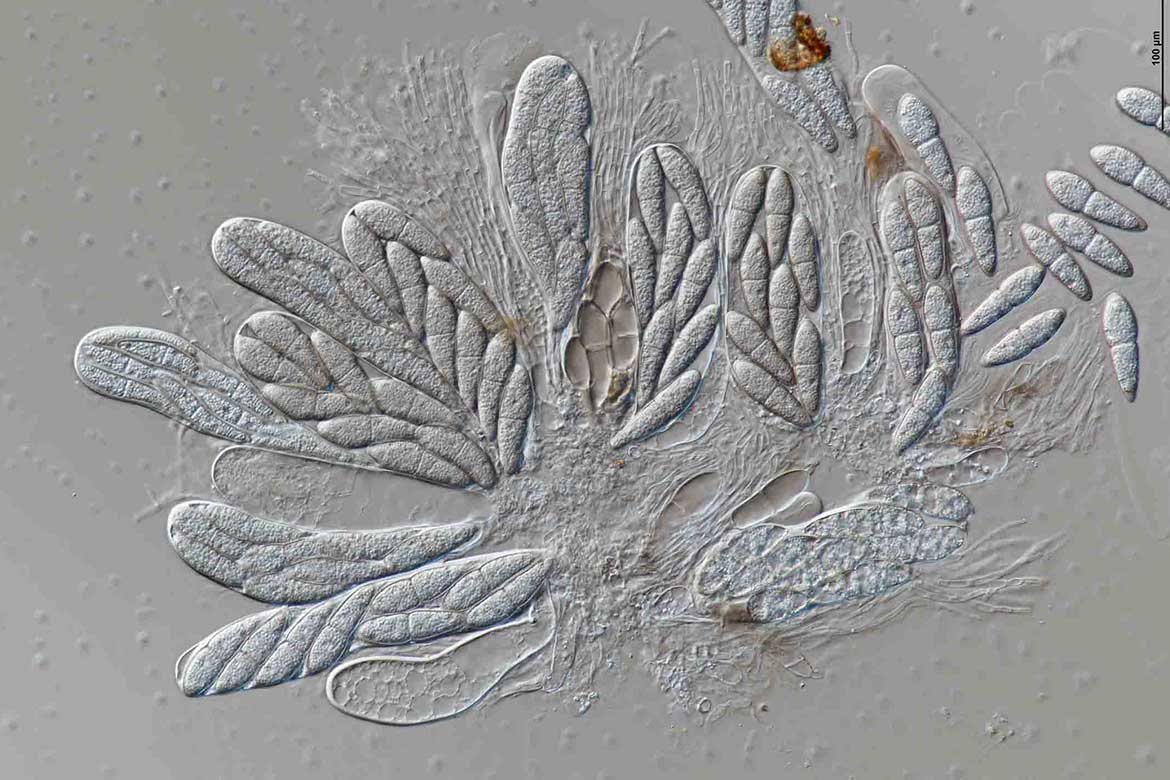
Full Description
Background:
The present study aims to address the following key research gaps and challenges within the broader field of fungal research in Sri Lanka. Inadequate studies in Sri Lanka regarding the freshwater fungi, particularly in relation to their taxonomical and molecular characteristics, Inadequate studies in Sri Lanka regarding the freshwater fungi, particularly in relation to their taxonomical and molecular characteristics, Fewer comparison studies on freshwater fungi across lentic and lotic habitats, Insufficient studies into fungal diversity in diverse habitats such as rivers, lakes, and wetlands and Insufficient studies into fungal diversity in diverse habitats such as rivers, lakes, and wetlands. It aims to explore the underexploited potential of freshwater fungi for industrial and agricultural applications due to limited species identification.
Objectives:
Main objective
To investigate the taxonomy and phylogeny of freshwater endophytic fungi associated with aquatic plants and saprotrophic fungi associated with decaying plant debris, and to explore their potential industrial applications, focusing on laccase activity, siderophore production, and antimicrobial compound synthesis
Specific objectives
- To survey freshwater endophytic fungi associated with aquatic plants and saprotrophic fungi associated with decaying plant debris in freshwater bodies of the Anuradhapura district.
- To classify and differentiate fungal species using DNA barcoding and phylogenetic analysis
- To estimate the spatial diversity of freshwater fungi (endophytic fungi associated with different aquatic plant species and saprotrophic fungi associated with decaying plant debris) across varying environmental gradients in selected freshwater bodies
- To identify and describe potential novel fungal species.
- To screen and evaluate freshwater fungi for their potential industrial applications, for laccase production for dye decolorization.
Expected Outcomes:
- Comprehensive literature survey about the aquatic endophytic and plant debris-associated freshwater fungi in the Anuradhapura district in Sri Lanka
- Identification and characterization of taxonomically and phylogenetically novel freshwater fungal taxa in the Anuradhapura district in Sri Lanka.
- Assess fungal diversity across various freshwater habitats, rivers, lakes, and wetlands
- Study how fungal diversity changes with seasons and environmental conditions
- Repositor to ensure the long-term preservation of freshwater fungi for future innovations and the phylogenetic analysis process
- Extracellular enzyme production for industrial application using freshwater fungus.
- Development of laccase beads for the industrial dye degradation process.